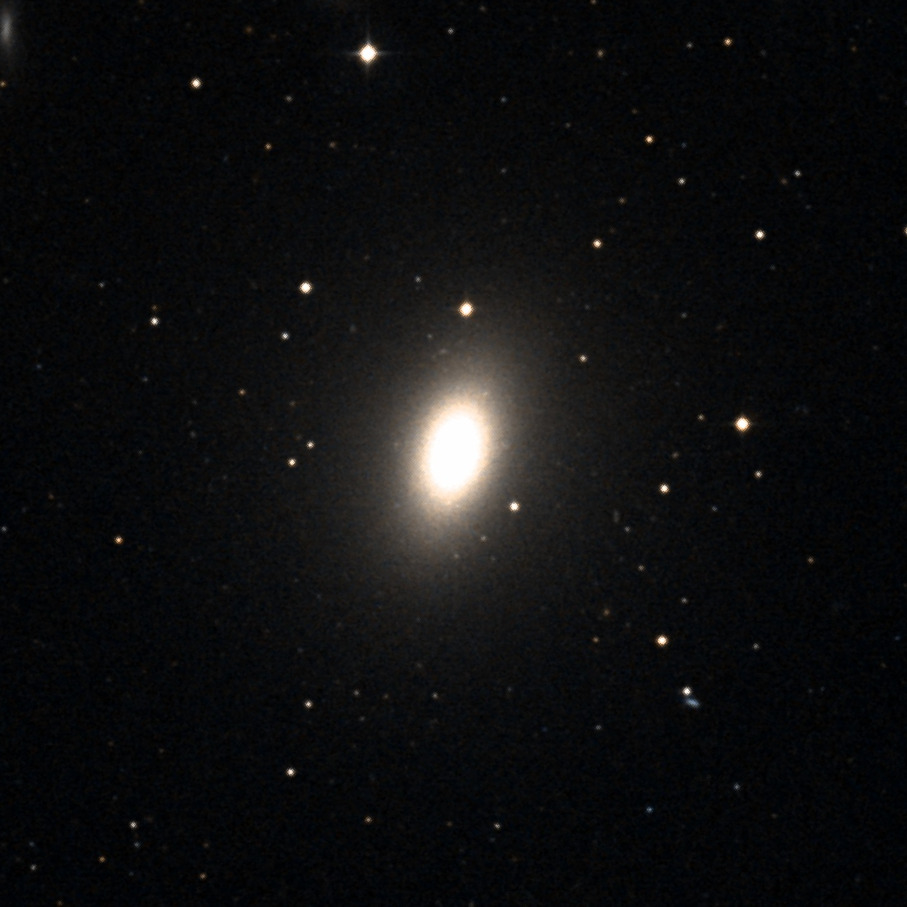
Messier 59.
Galaxia en la constelación de virgo.
Coordenadas AR: 12:42:02,24 (hh:mm:ss) Dec: +11:38:49,3 (º:’:»)
Magnitud aparente: 9,56
Identificador ngc: 4621
WIKIPEDIA:
La Galaxia elíptica M59 (también conocida como Objeto Messier 59, Messier 59, M59 o NGC 4621) es una galaxia elíptica -considerada, sin embargo, por algunos autores cómo galaxia lenticular[1]- de la constelación de Virgo. Fue descubierta por Johann Gottfried Koehler en 1779.
Su magnitud conjunta en banda B (filtro azul) es igual a la 11.0ª.
M59 es una de las galaxias más grandes del Cúmulo de Virgo. Su distancia a la Tierra se estima que en 60 millones de años luz, y cómo otras muchas galaxias grandes, tiene en su centro un agujero negro supermasivo, en su caso
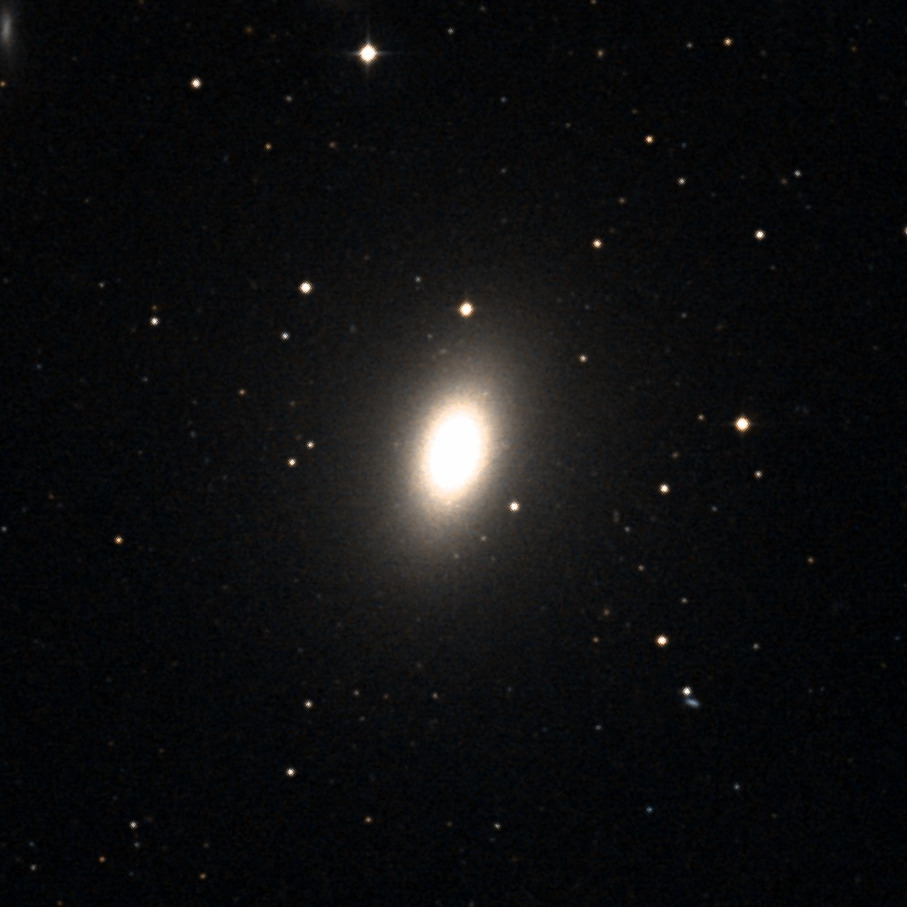
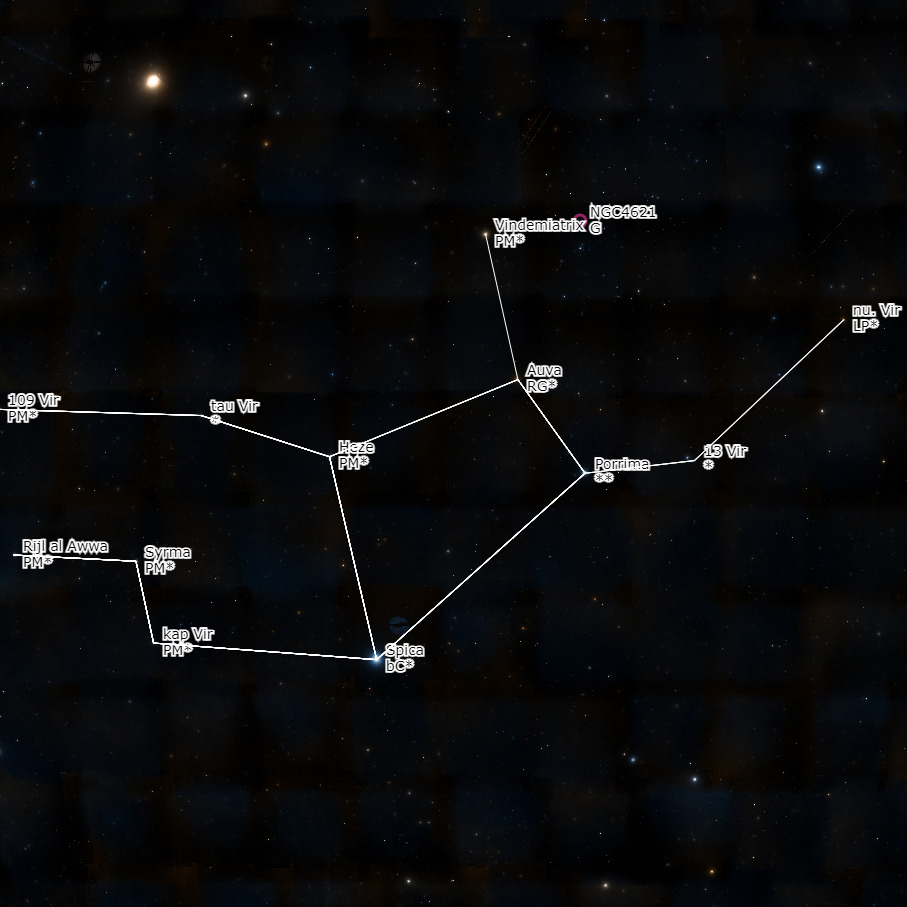
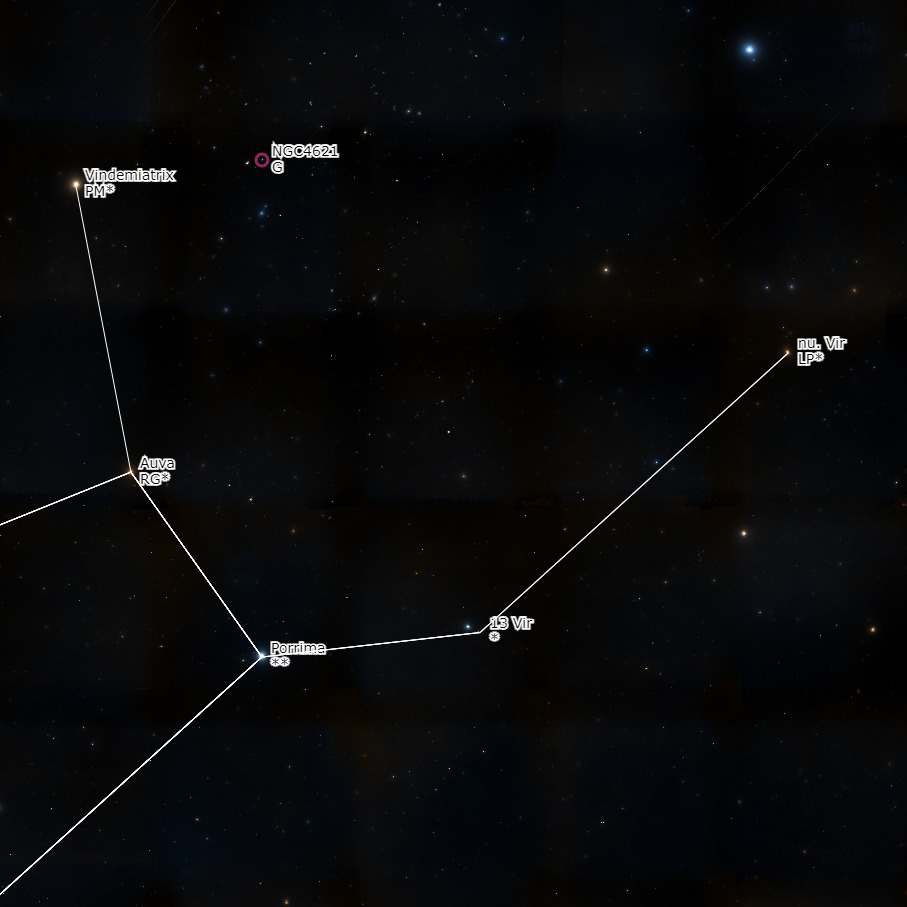
CRÉDITO IMÁGENES: Funding for the SDSS and SDSS-II has been provided by the Alfred P. Sloan Foundation, the Participating Institutions, the National Science Foundation, the U.S. Department of Energy, the National Aeronautics and Space Administration, the Japanese Monbukagakusho, the Max Planck Society, and the Higher Education Funding Council for England. The SDSS Web Site is http://www.sdss.org/. The SDSS is managed by the Astrophysical Research Consortium for the Participating Institutions. The Participating Institutions are the American Museum of Natural History, Astrophysical Institute Potsdam, University of Basel, University of Cambridge, Case Western Reserve University, University of Chicago, Drexel University, Fermilab, the Institute for Advanced Study, the Japan Participation Group, Johns Hopkins University, the Joint Institute for Nuclear Astrophysics, the Kavli Institute for Particle Astrophysics and Cosmology, the Korean Scientist Group, the Chinese Academy of Sciences (LAMOST), Los Alamos National Laboratory, the Max-Planck-Institute for Astronomy (MPIA), the Max-Planck-Institute for Astrophysics (MPA), New Mexico State University, Ohio State University, University of Pittsburgh, University of Portsmouth, Princeton University, the United States Naval Observatory, and the University of Washington.